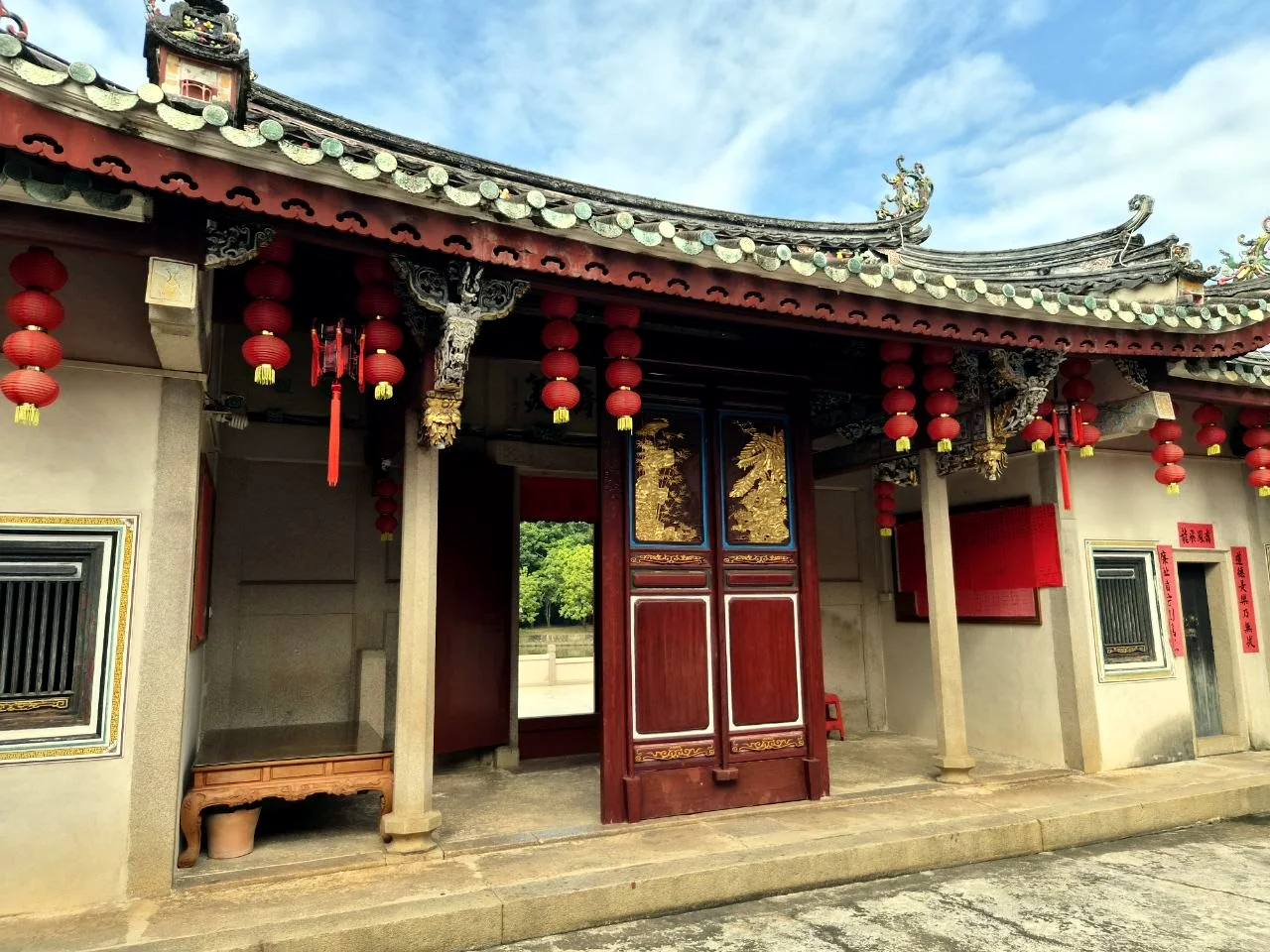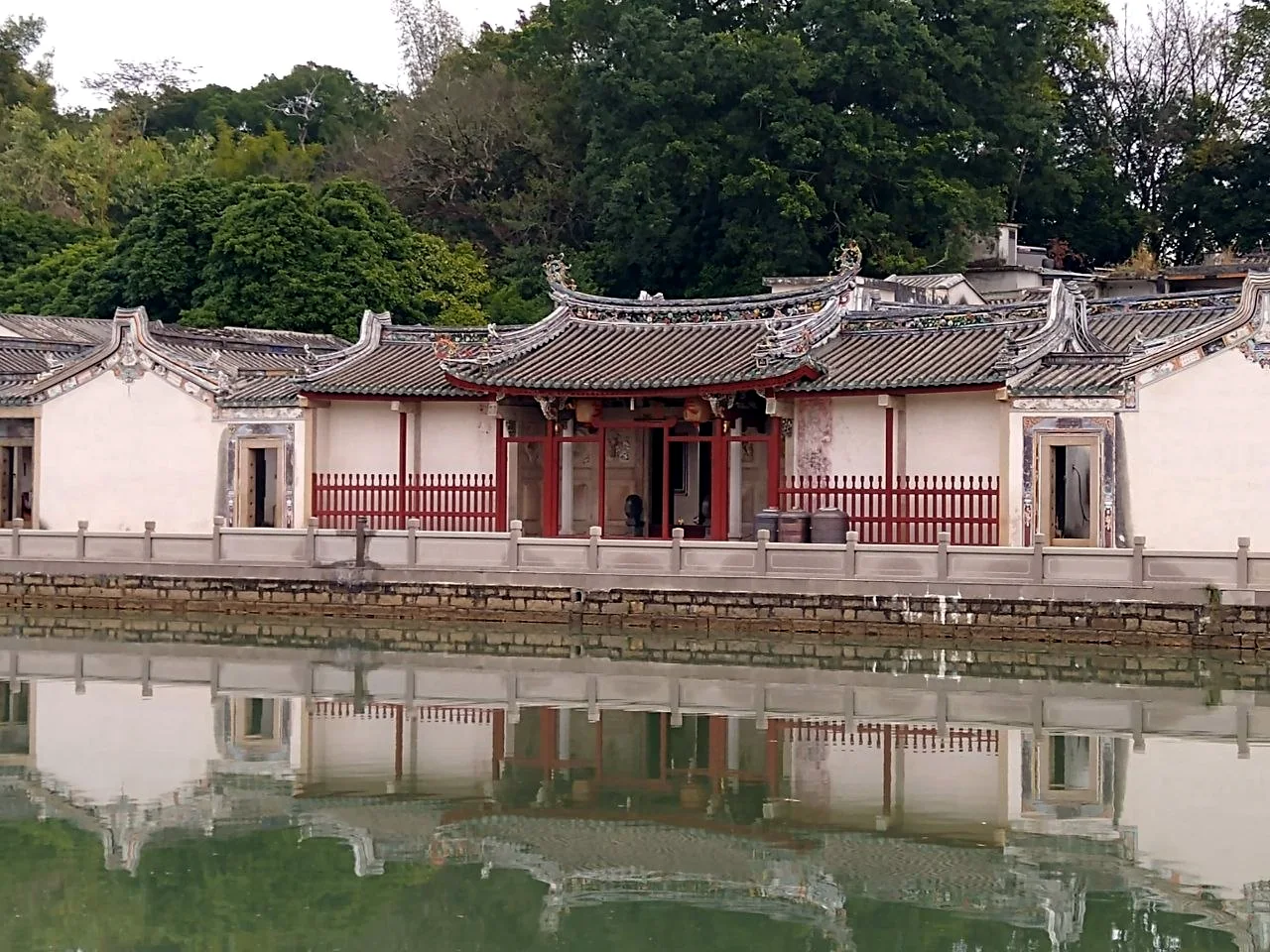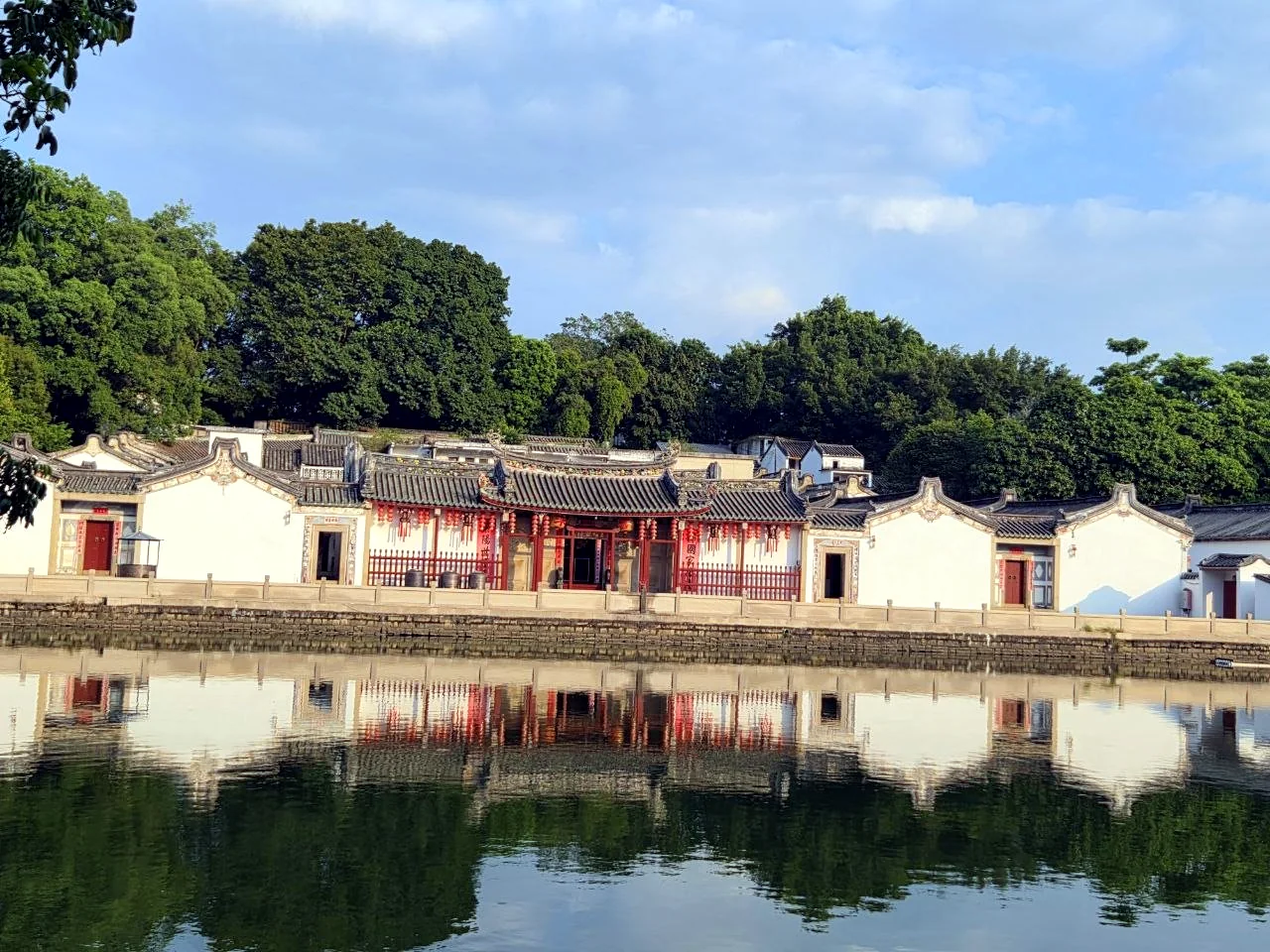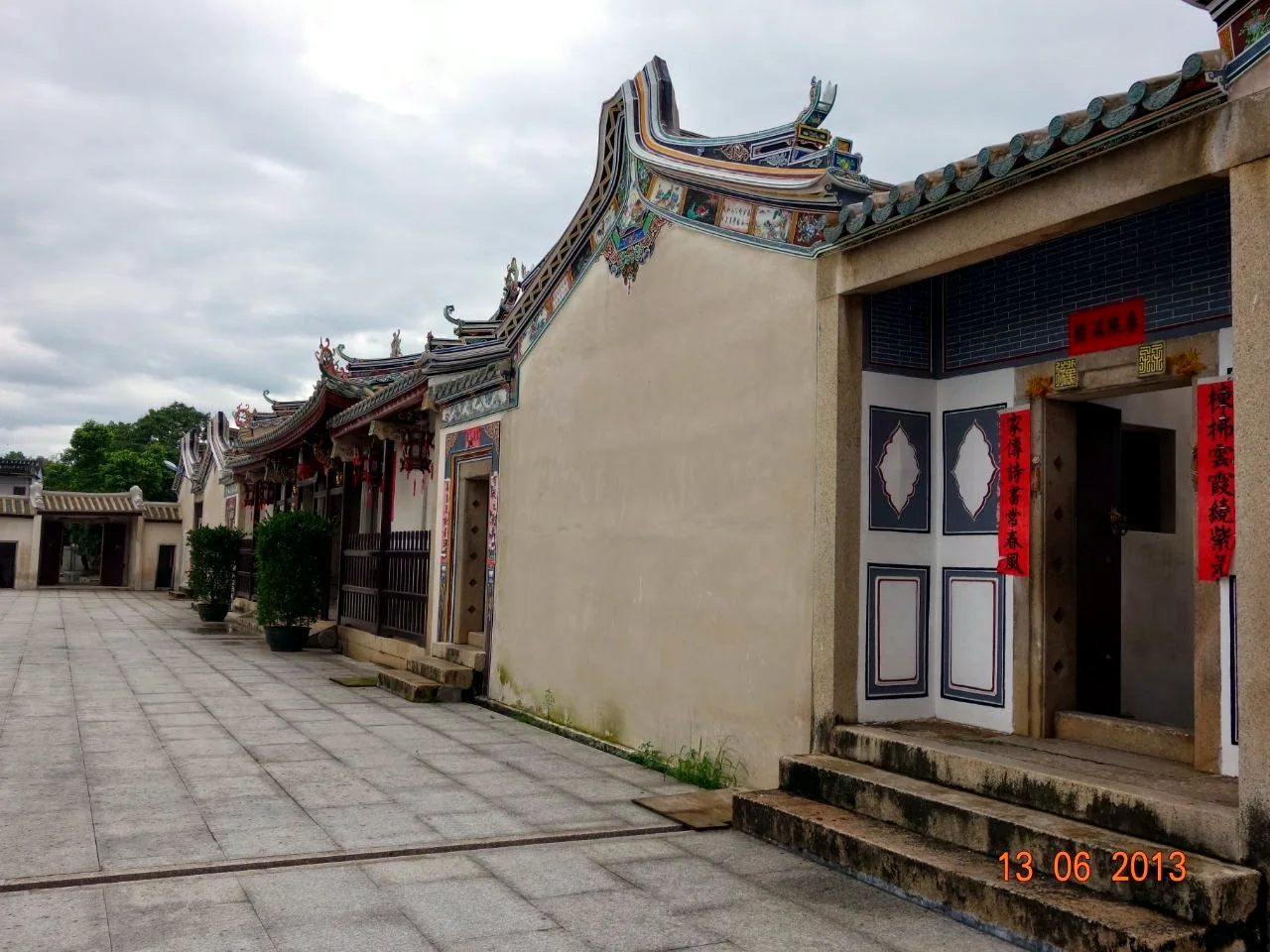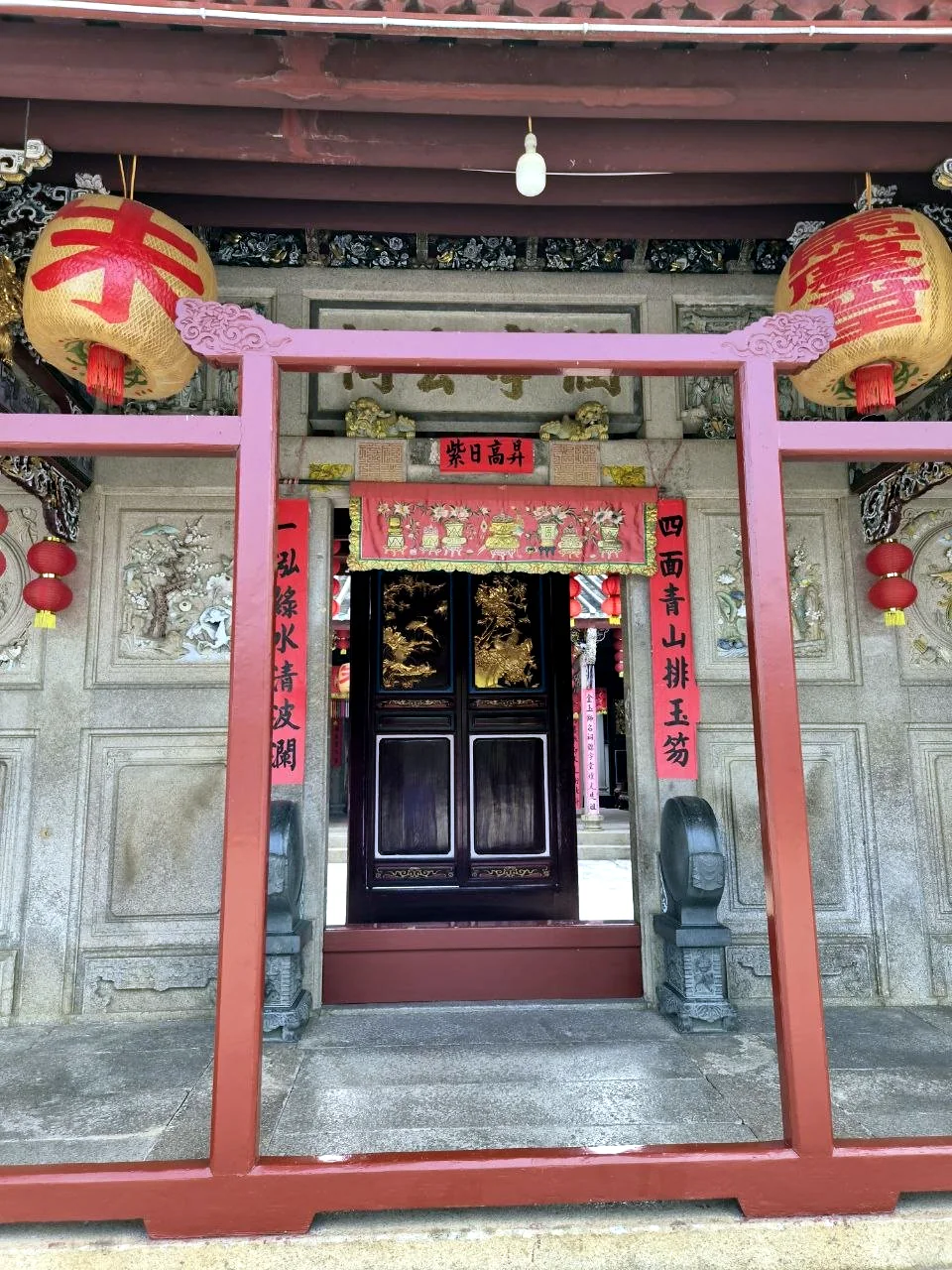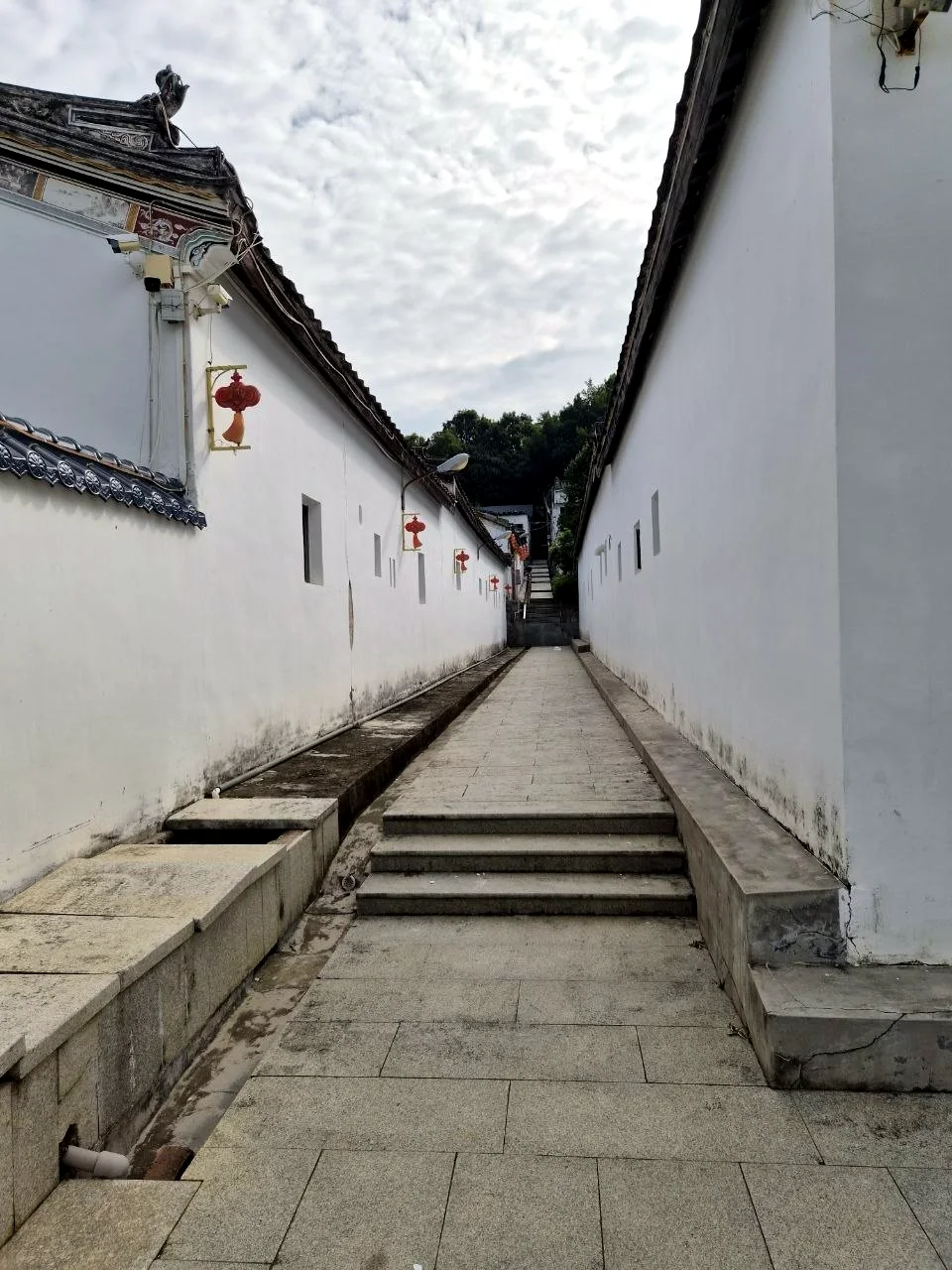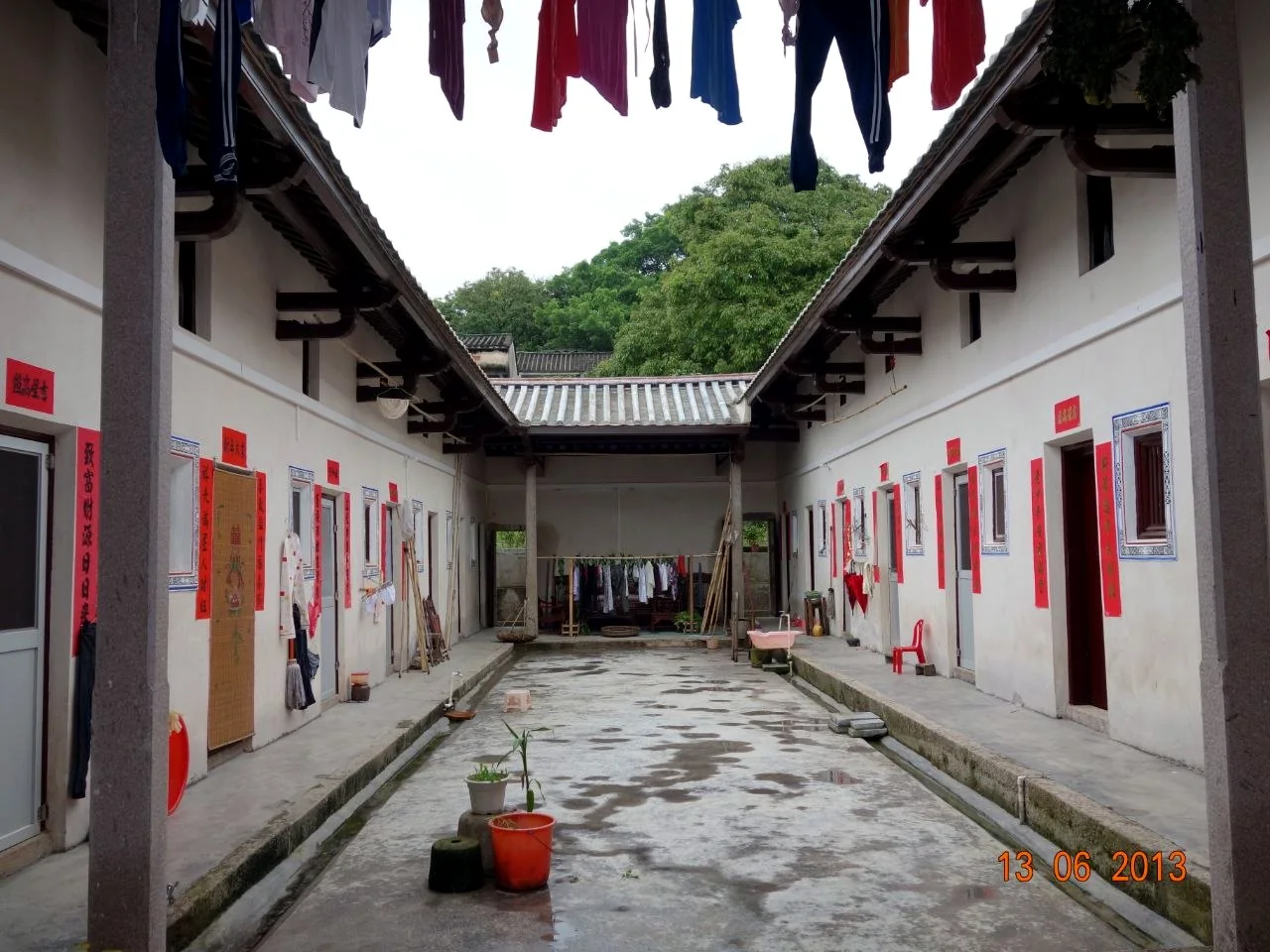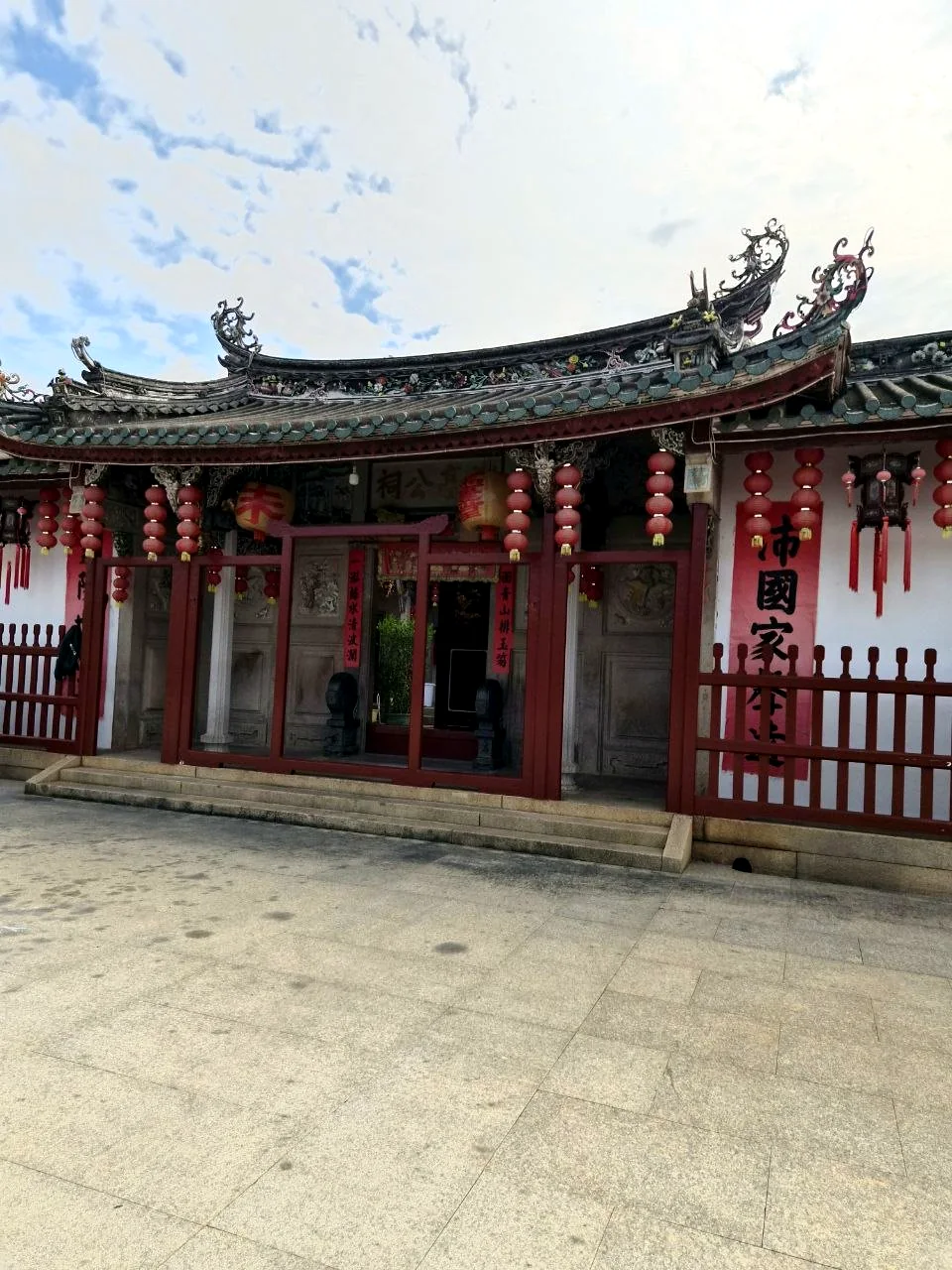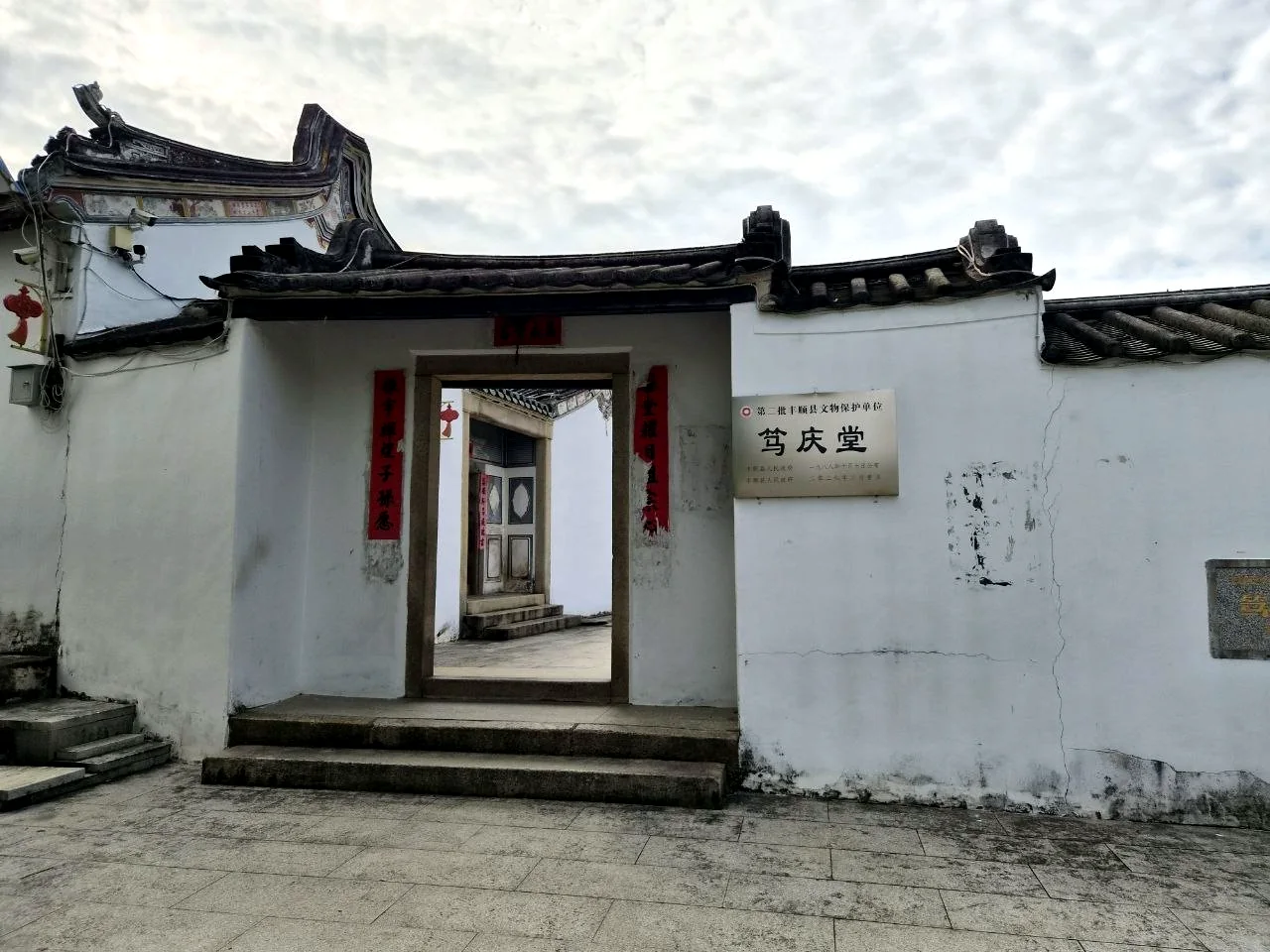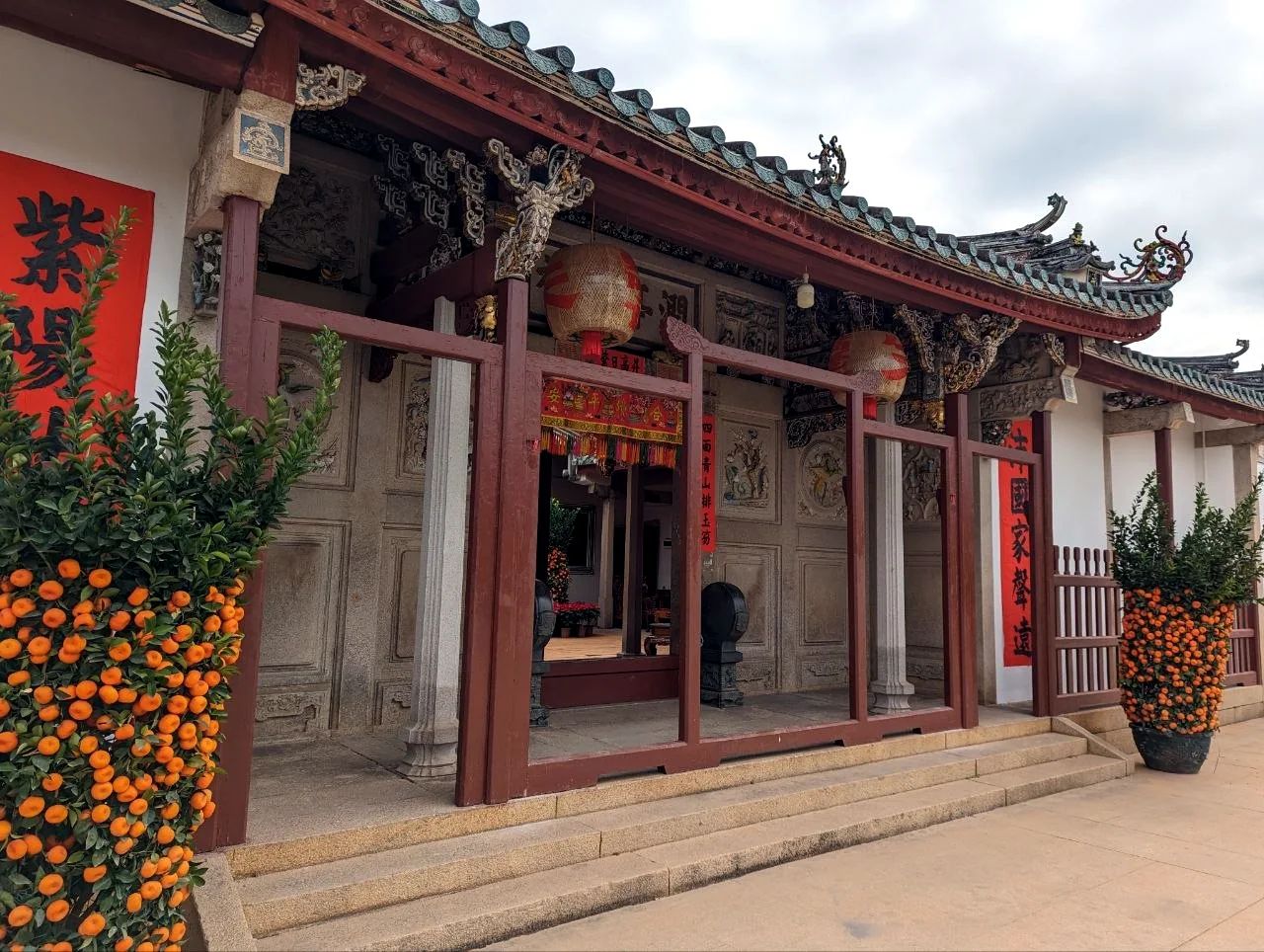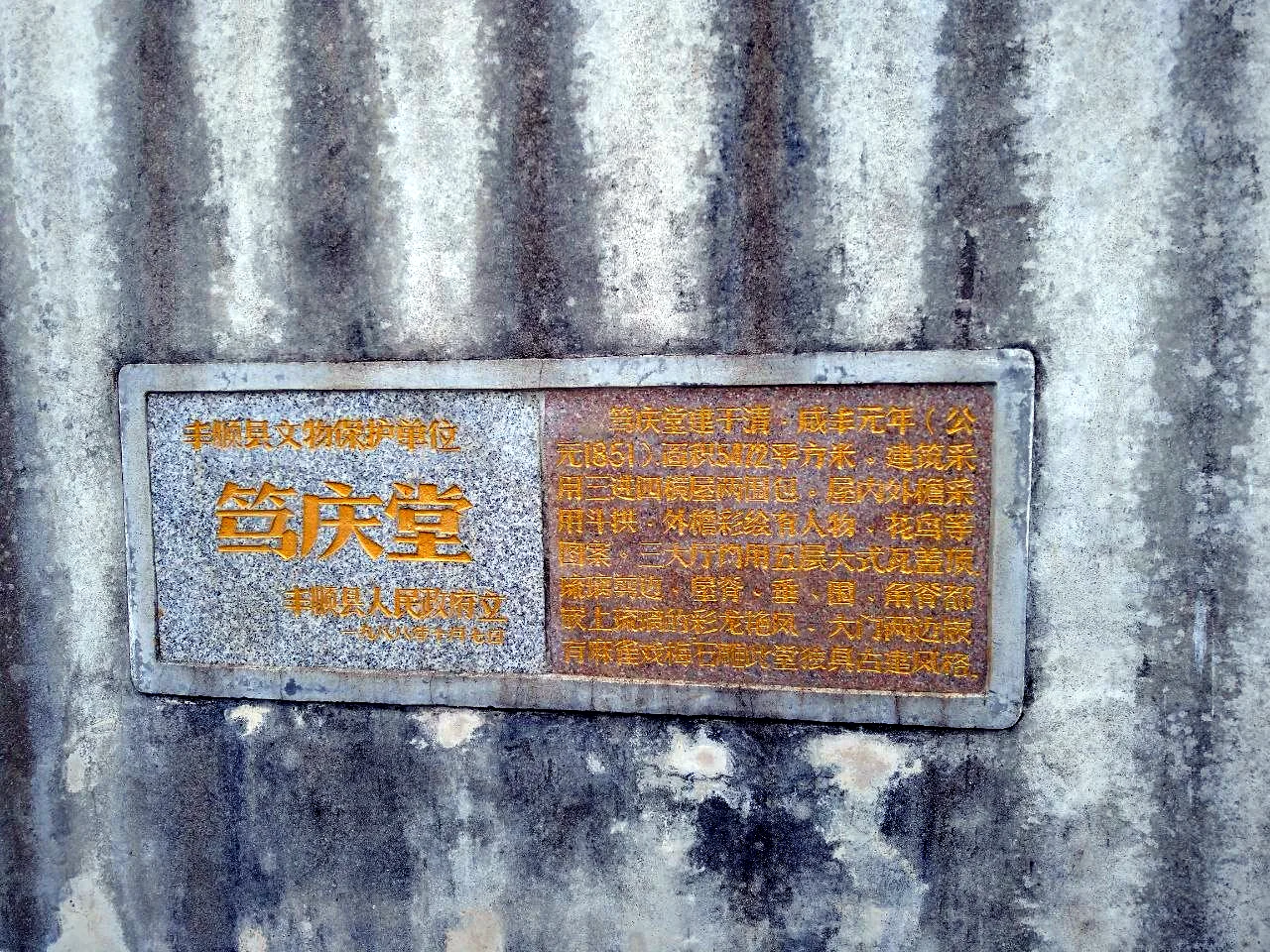
清咸豐元年(1851年)建。客家圍龍屋與潮汕民居在此交融,俗稱「駟馬拖車」,鄉人又稱「洋船屋」——朱氏父子自滬上歸來,將未曾親見洋火輪的長輩之憾,刻進了這座宅院的形制裡。 Built in 1851, the first year of the Xianfeng reign. Here the Hakka walled-house tradition meets Chaoshan courtyard architecture — locally called the "four-horse carriage," and known to villagers as the "Steamship House," shaped by a homecoming wish that a family elder might yet see the steamships of Shanghai.
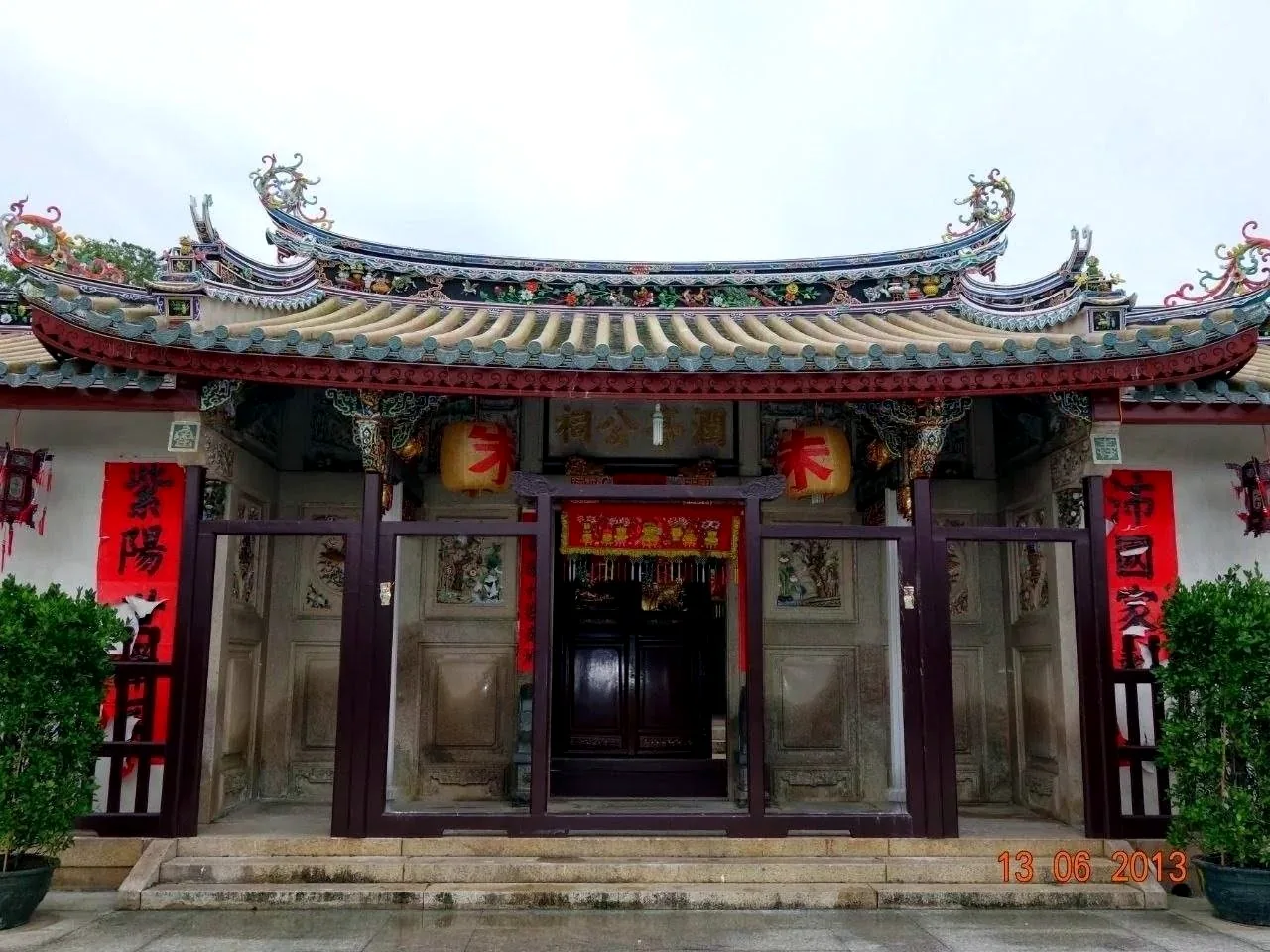
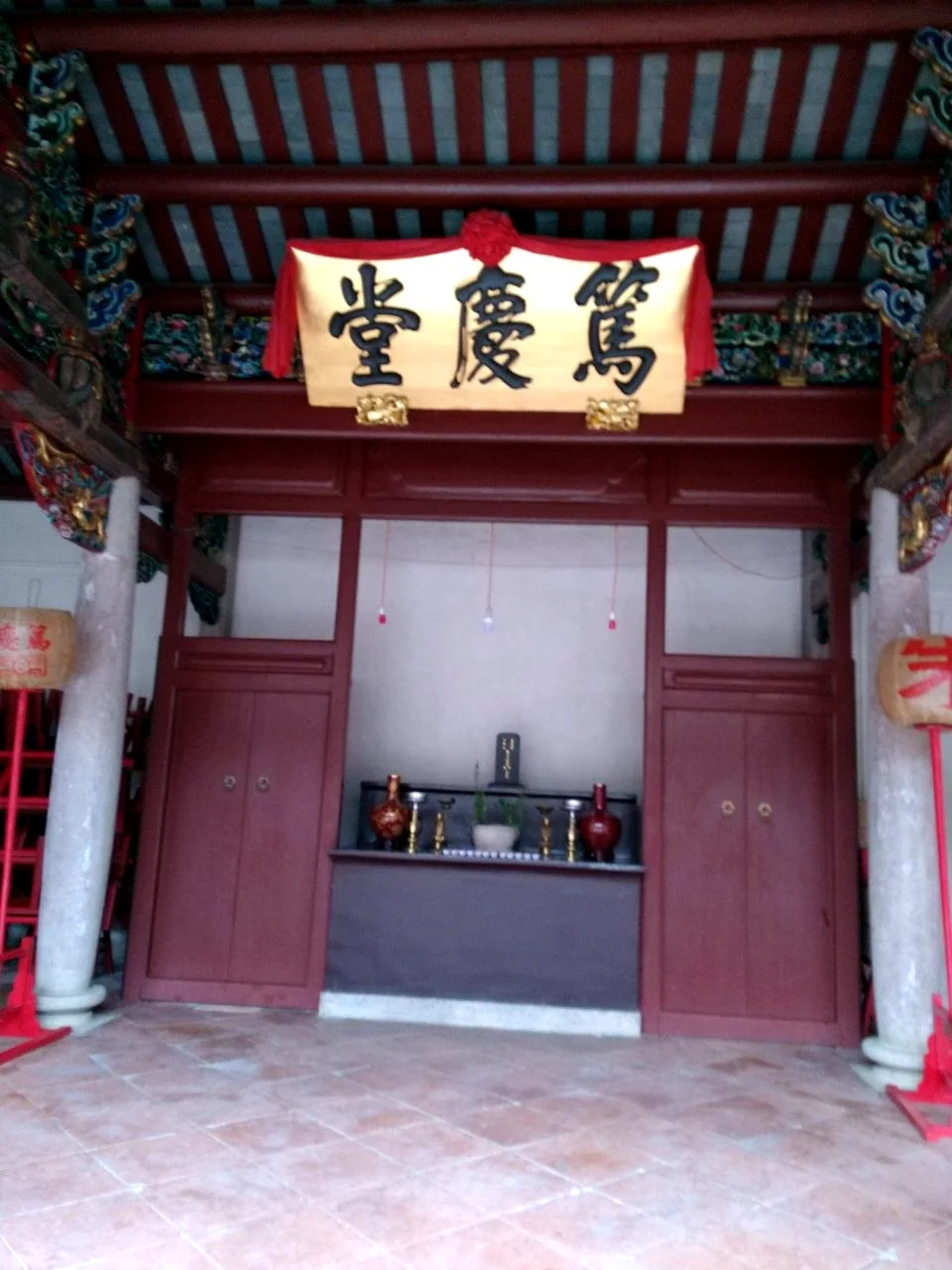
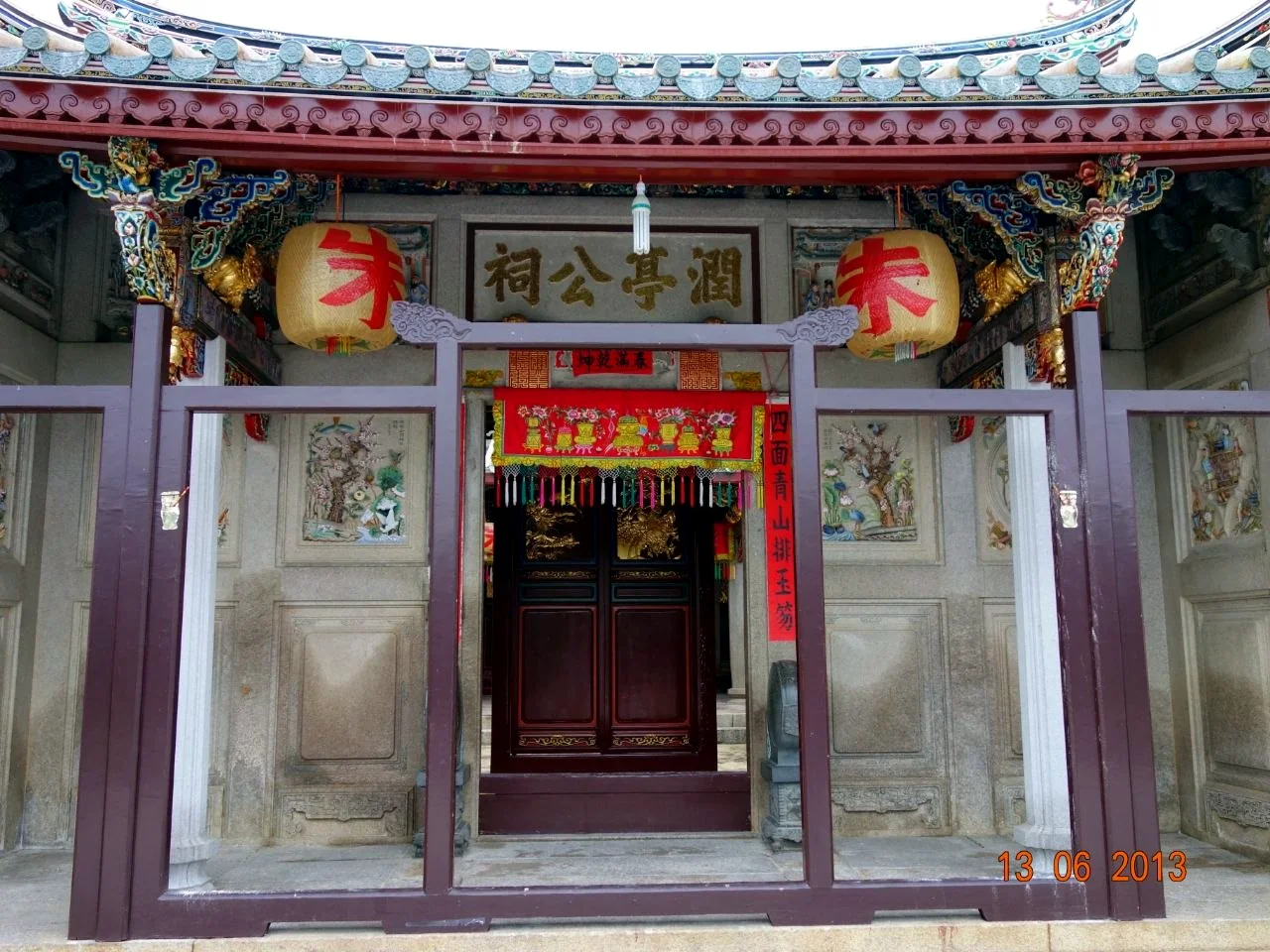
篤慶堂為朱氏家族祖居。堂號「篤慶」,取篤實樸素、積慶餘福之意;族人又稱「潤亭公祠」,以祀奠定家業的先祖潤亭公。 Toh Kheng Tang is the ancestral residence of the Zhu family. The hall name means "sincere simplicity, accumulated blessing"; the clan also calls it the Runting Ancestral Hall, after the forebear Runting Gong who laid the family's foundation.
朱氏起家於黃田。黃田為當地重要的鹽業集散地,朱氏經營鹽業,由此積累下最初的雄厚資本。 The family's fortunes began at Huangtian, a major salt distribution centre of the region. Salt trading built their first substantial capital.
朱一喬、朱宗懷父子順應商潮前往上海等地經商,經營有方,漸成富甲一方的著名商賈,人稱滬上鉅富。 Zhu Yiqiao and his son Zhu Zonghuai followed the tide of trade north to Shanghai, where shrewd management made them merchants of great wealth.
在滬經商期間,父子二人接觸到西洋輪船(鄉人稱「洋火輪」)等新奇事物。相傳家中長輩始終未能親見洋火輪,後人為圓其心願,回鄉建宅時特意融入船形設計。咸豐元年(1851年),篤慶堂落成。 In Shanghai they encountered Western steamships, "fire-wheel ships" in local speech. It is said an elder of the family never saw one — and so, when the house was raised back home, a ship's form was woven into its design. Toh Kheng Tang was completed in 1851.
篤慶堂布局宏大、錯落有致,俗稱「駟馬拖車」,融合宮殿式、府第式與三合院式的特點。三進大廳堂居中,兩廂與兩座圍龍屋環護,堂內廳堂、天井、房間眾多,迴廊錯綜,通風系統巧妙。 Grand in plan and rich in incident, the compound is known as the "four-horse carriage," blending palatial, mansion and courtyard forms. A three-bay main hall stands at its centre, flanked by side wings and two encircling walled houses. Halls, skywells and rooms multiply within; corridors turn and twist; ventilation is ingeniously handled.
地處客家與潮汕文化交界帶,建築既有客家圍龍屋的格局與防禦,也吸收了潮汕大宅的進深、對稱與裝飾美學——是客潮文化交融的一處例項。 Set where Hakka and Chaoshan cultures meet, it carries the Hakka walled house's defensive order alongside the depth, symmetry and ornament of the Chaoshan great house — a concrete instance of the two traditions converging.
門楣石刻「花萼藩屏」四字,筆力遒勁,落款「翰林 啟璋書」——為清咸豐三年進士、翰林院編修林啟璋(廣東潮州人)手筆。「花萼」取自《詩經》「花萼相輝」,喻兄弟和睦、宗族團結;「藩屏」取屏障護持之義,寄望後代同心捍衛家業。能請動翰林題額,可見朱氏滬上發跡之後,在家鄉已屬聲望極高的門第。 Cut into the stone above the doorway are four characters, hua e fan ping — "flower calyx, protecting screen" — in forceful brushwork, signed "by Qizhang of the Hanlin." The calligrapher is Lin Qizhang of Chaozhou, Metropolitan Graduate of 1853 and compiler of the Hanlin Academy. The calyx, from the Book of Songs, figures brothers in mutual accord and a clan held together; the screen is a wish that later generations stand as one to guard the family's work. That a Hanlin scholar could be engaged to inscribe the lintel tells how far the Zhu family had risen in standing at home after its Shanghai fortune.
宅內石雕、木雕工藝精美,屋脊飾潮汕嵌瓷,樑架施金漆木雕,石門框浮雕人物花鳥——清代大戶人家營造技藝的集中呈現。 Stone and wood carving are of fine workmanship: porcelain-shard ridge ornaments in the Chaoshan manner, gilt-lacquer woodcarving on the beams, and figure-and-flower reliefs on the granite door frame — a concentration of Qing-era building craft.
篤慶堂俗稱「洋船屋」,起因是一段孝親佳話。但若俯瞰細品,這座宅子的結構本身,也確實神似一艘遠航的大船。 The hall is nicknamed the "Steamship House," and the name began with a story of filial wish. But looked at closely — or from above — its very structure resembles a ship under way.
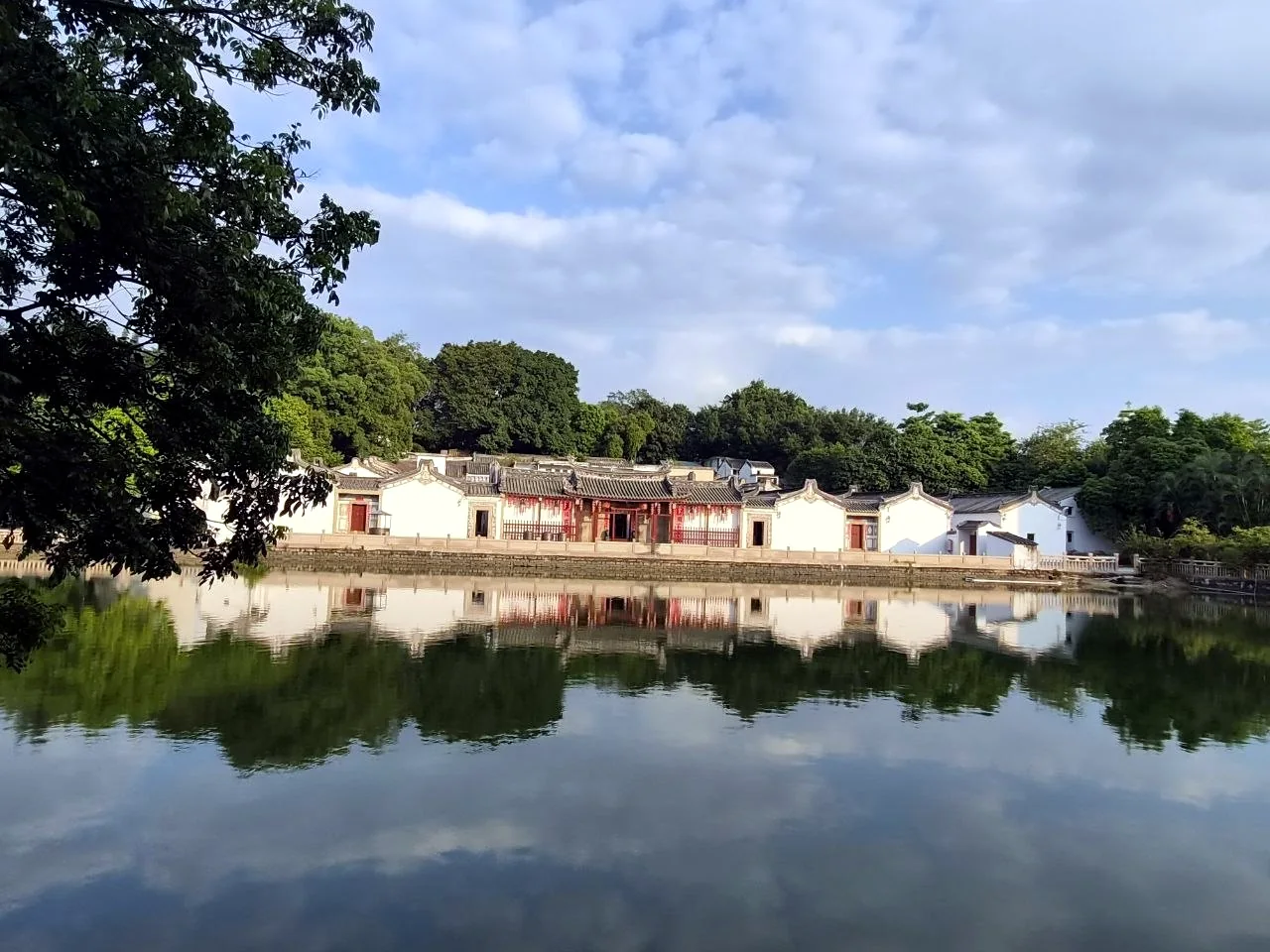
大宅前低後高。前方的半月池與禾坪(門坪)鋪展開來,如同船頭破開的水波。 The compound steps down toward the front. The half-moon pond and the threshing yard before it spread outward like water parted at the bow.
正堂與後圍包錯落有致,宛如輪船的船艙與駕駛臺,層層遞進,自高處望去,輪廓分明。 The main halls and the rear encircling wall rise in ordered tiers — cabin upon cabin, the bridge above them — their outline reading clearly from higher ground.
對以韓江水運起家、遠赴上海十里洋場經商的朱氏父子而言,「船」不只是近代工業文明的新奇物件,更象徵著家族「乘風破浪、順風順水」的商業精神。 For the Zhu father and son — who made their start on the Han River's waterborne trade and went on to the bustle of Shanghai — a ship was more than a curiosity of the industrial age. It stood for the family's own course: breaking through the waves, the wind astern.
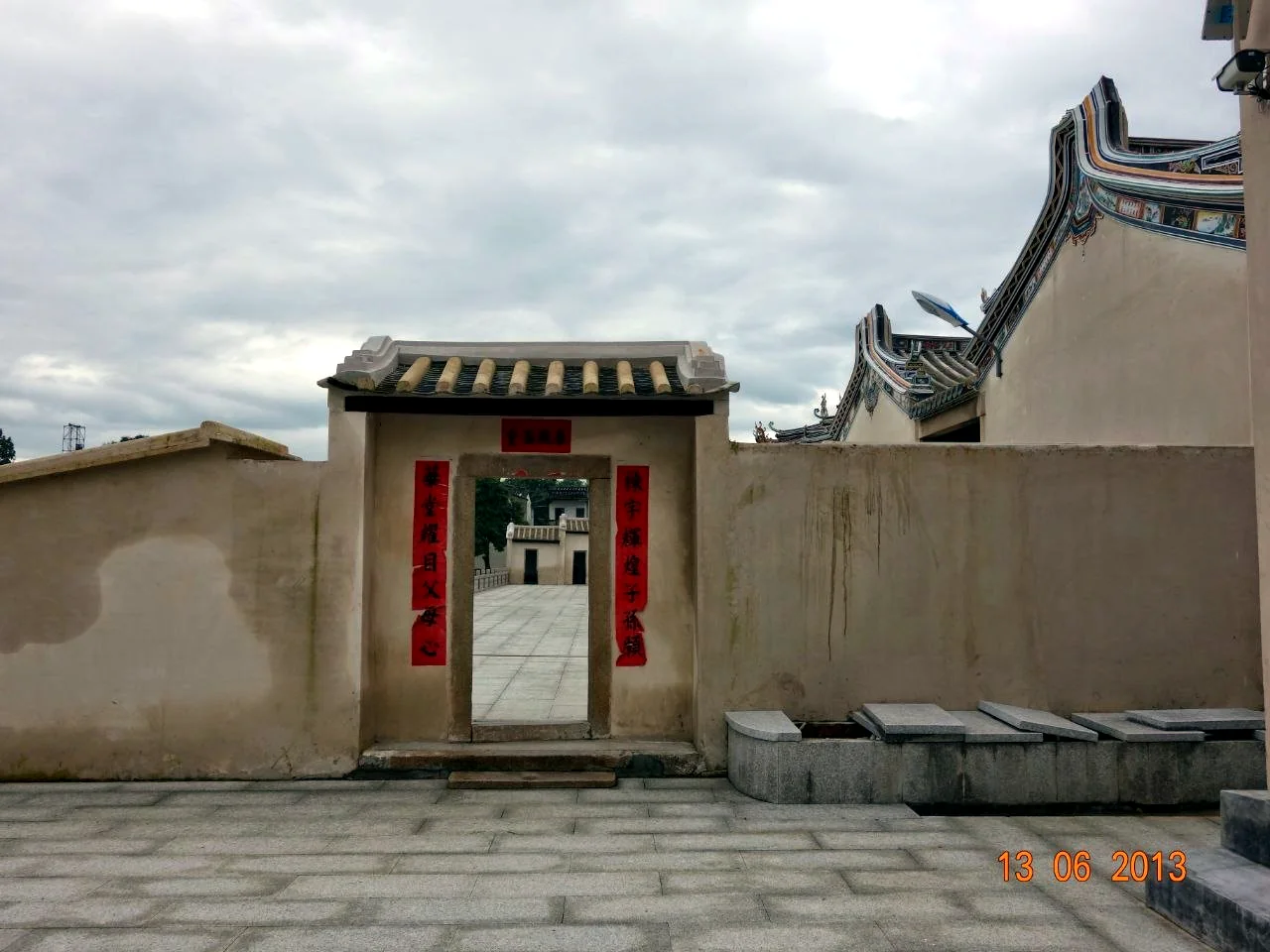
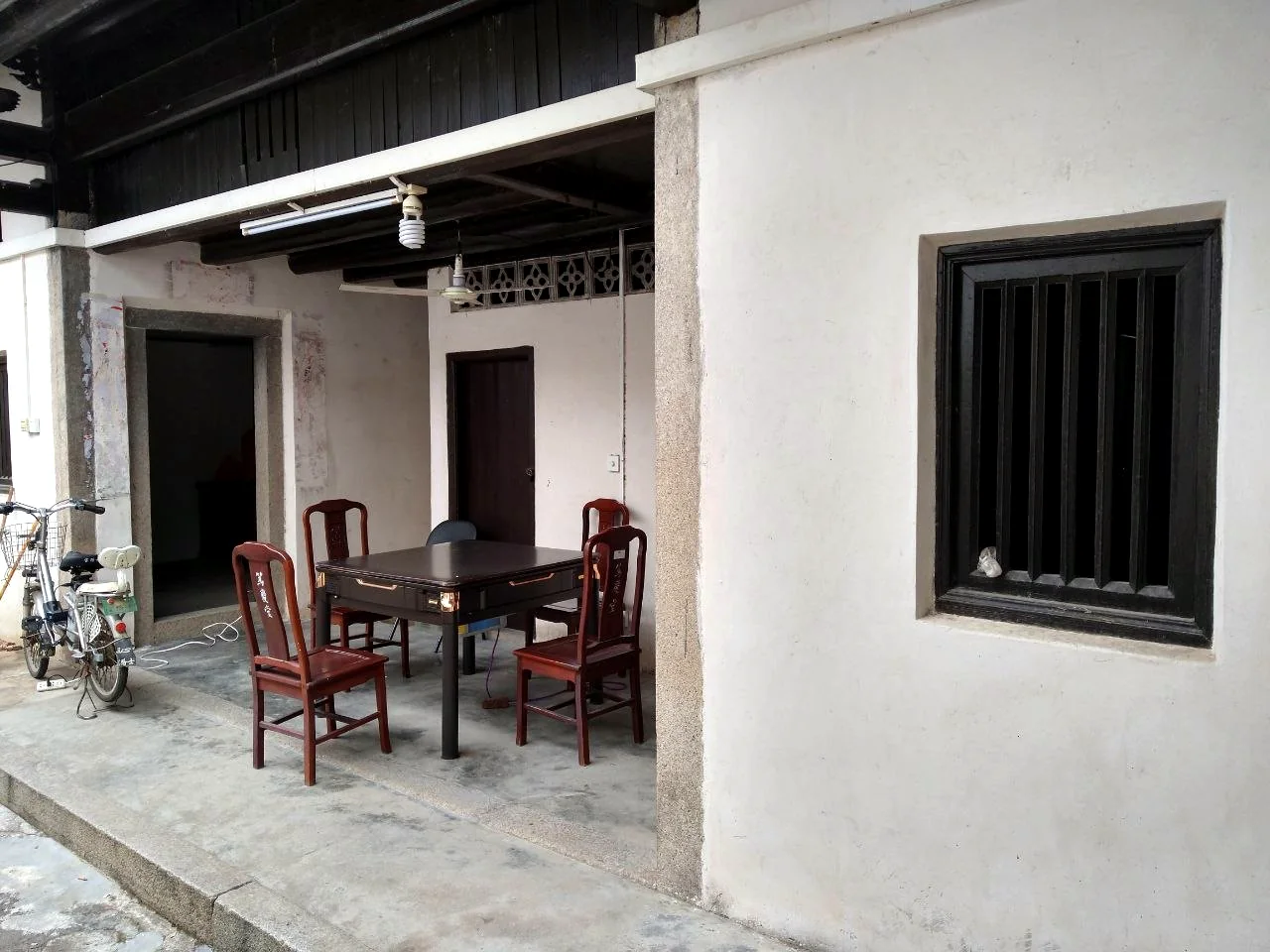
古宅內部迴廊錯綜,設有防火牆(火山牆),並暗藏排水與防盜系統。在清末治安動盪的年代,這樣的設計既能保障龐大家族的日常起居,又具備極強的安全防禦功能。 Corridors turn and double back within; fire walls of the stepped "volcano" profile divide the ranges; drainage and watchful passages are worked into the plan. In the unsettled late Qing, such a design sheltered a large household day to day while giving it real capacity to defend itself.
潤亭公祠正門Main entrance
正堂 · 篤慶堂匾Main hall and plaque
半月塘倒影Pond reflection
屋脊嵌瓷Ridge porcelain
門樓燈籠Gatehouse lanterns
水塘遠望Across the pond
石板巷道Stone-paved lane
狹長天井Long skywell
簷下燈籠Lanterns under the eaves
外圍牆 · 石埕Outer wall and stone yard
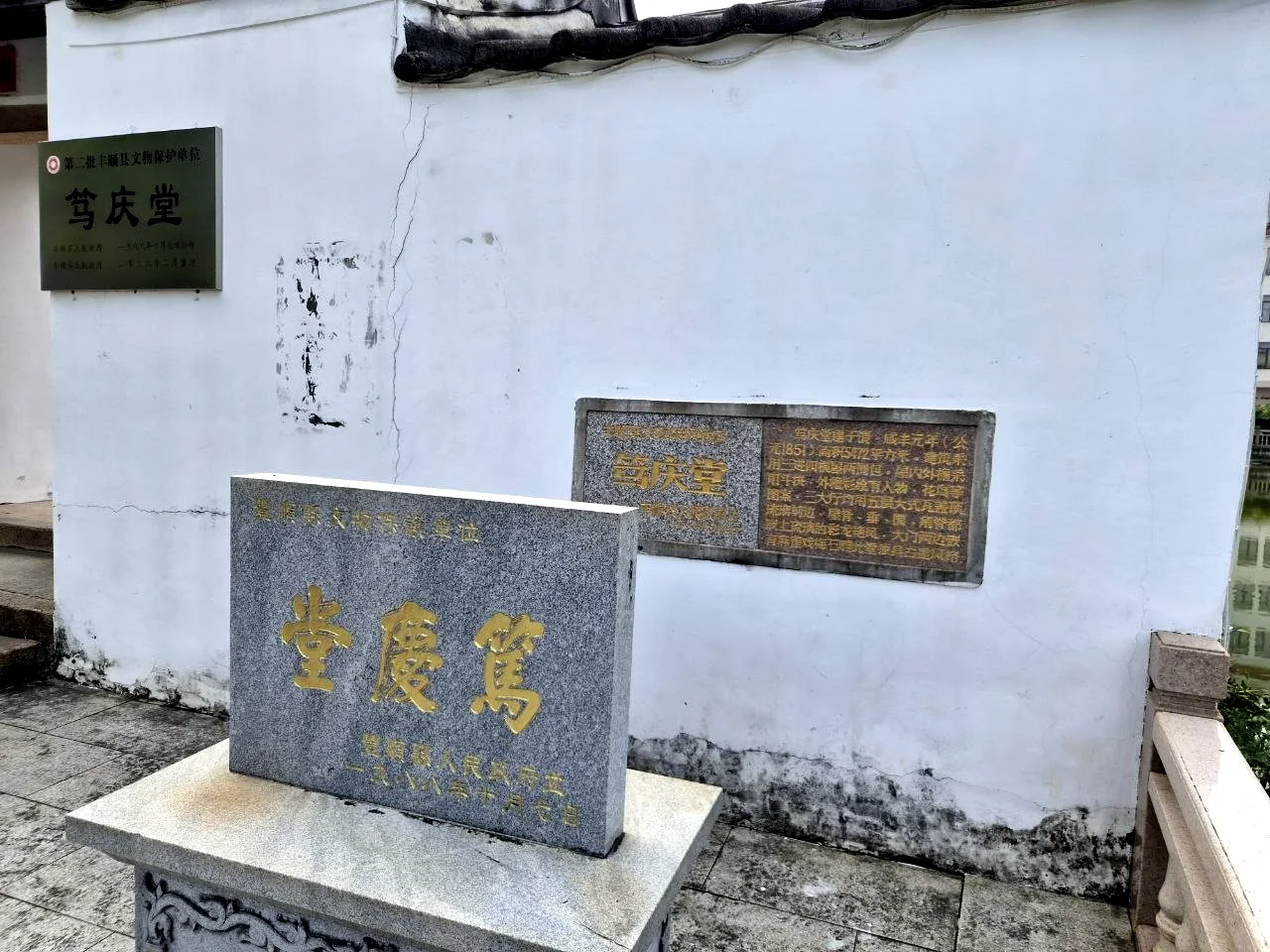
篤慶堂碑The stele
湖畔遠眺By the water
院門Courtyard gate
前立面Front elevation
廂房迴廊Side-wing corridor
文保銘牌Heritage plaque
照片攝於 2013 年 6 月。族譜為紙本,暫未數字化。 Photographs taken June 2013. The clan genealogy survives only in printed form and has not yet been digitised.
篤慶堂位於廣東省梅州市豐順縣留隍鎮口鋪村。留隍又稱留皇,處韓江東岸,與潮州相望,素有「橄欖之鄉」「潮客之都」「千年古鎮」「韓江明珠」之稱。 Toh Kheng Tang stands in Koupu Village, Fuling Town, Fengshun County, Meizhou, Guangdong. Fuling — also written Liuhuang — lies on the east bank of the Han River facing Chaozhou, and is known as the home of the olive, a capital of Hakka–Chaoshan culture, a thousand-year-old town, and the pearl of the Han River.
此地正處客家與潮汕兩大文化板塊的交界,篤慶堂的形制、裝飾與生活氣息,皆由此而生。 Here the Hakka and Chaoshan cultural realms meet — and the form, ornament and lived texture of Toh Kheng Tang grow directly out of that meeting.
宗親聯絡、史料提供、參訪諮詢,均可用下列郵箱。 For family correspondence, historical material, or visit enquiries.
亦可直接使用 Webmail,在瀏覽器內收發信件,無需安裝軟體。已獲發賬號者,憑賬號密碼登入即可。 You may also use webmail to read and send mail in the browser, with no software to install. Those who already hold an address simply sign in.
來信請註明來意與聯絡方式;涉及族譜、史料者,歡迎隨信附上掃描件或照片。 Please state your purpose and how to reach you. For genealogy or historical material, scanned pages or photographs are welcome.
朱氏宗親與研究者可申請 @TohKhengTang.org 郵箱,以便通訊與交流資料。本站為民間自發整理,填妥後我們會以個人身份與您聯絡。 Zhu family members and researchers are welcome to request an @TohKhengTang.org address for correspondence and for sharing material. This is a volunteer project — you will hear back from an individual, not from an institution.